
DIY vs Professional Painting: Where Each Makes Sense
Learn when a homeowner should paint themselves and when to hire pros, with practical criteria for Ajax, ON properties.
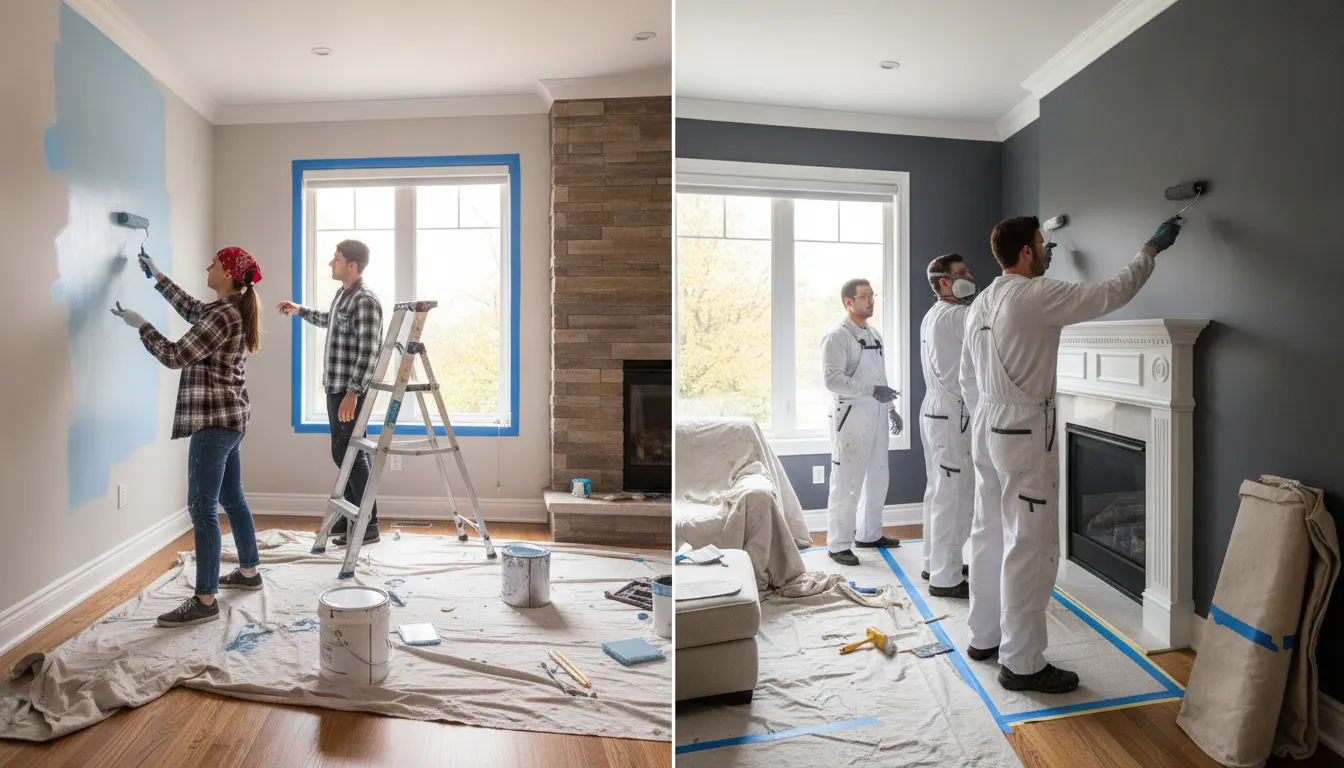
When should you DIY and when should you hire a pro?
Small, low-risk jobs with straightforward prep and a willing weekend can be DIY; larger, high-access, time-sensitive, or warranty-critical projects are usually best left to a professional painter.
Scope and complexity
If the job is one room, a closet, or trim touch-ups, it’s often practical for a homeowner to do it. Full exterior repaints, multi-room color changes, or jobs involving textured ceilings, lead remediation, or complex trim profiles increase complexity and favor hiring a pro.
Access and safety
Jobs that require ladders above single-story height, scaffolding, or working from steep roofs are safety risks for DIYers. Professionals bring scaffolding, fall protection, and experience working at height safely.
Quality, warranty and longevity
Professional painting often includes a written warranty, specification-grade primers and paints, and multi-coat systems that last longer. DIY work can be satisfying and cost-effective for short-term refreshes but may not match a pro finish in durability or uniformity.
Time, disruption and seasonal timing
Consider your schedule—DIY takes time for prep, cure time between coats, and cleanup. In Ajax and Durham County, outdoor painting windows depend on season and humidity; professionals plan around weather and have products suited for cooler or variable Ontario conditions.
Step-by-Step: DIY vs Professional Painting: Where Each Makes Sense
Follow this decision and execution flow to choose the right approach and carry out the work efficiently.
- 1
1. Define the project
List every surface to be painted, dimensions, and any repairs (rot, plaster cracks, mildew). Include desired paint sheen and whether trim, doors, or cabinets are included so you can estimate time, materials, and whether specialized tools or skills are needed.
- 2
2. Evaluate safety and access
Inspect for high ladders, scaffolding needs, lead paint (on homes pre-1990s) or mould, and electrical or plumbing obstacles. If hazards or heights are present, a professional with proper equipment and insurance is the safer choice.
- 3
3. Get two estimates and compare
If considering a pro, request itemized quotes for labour, materials, surface prep, and waste disposal. For DIY, price out primer, paint, brushes, rollers, tape, drop cloths and rental equipment—compare total outlay and how much time you’ll invest.
- 4
4. Test products and colours
Buy small sample pots and apply them to the wall to view at different times of day and under Ajax’s varying light, especially near Lake Ontario where light can change quickly. Professionals can produce mock-ups and can advise on opacity and the number of coats required.
- 5
5. Prepare thoroughly
Prep is where most paint failures begin—clean surfaces, scrape loose paint, sand gloss to dullness, repair holes, caulk gaps, prime problematic areas and protect floors/landscaping. Pros spend a large portion of the job on prep; match that attention to avoid early peeling or visible repairs.
- 6
6. Execute and inspect
If DIY, follow manufacturer dry times and apply recommended film thickness; if pro, confirm the scope, timeline and cleanup expectations in writing. On completion, inspect in natural daylight and note areas needing touch-up while you still have access to products or contractor follow-up.
Mistakes to Avoid
Painting is deceptively simple; several common mistakes cause the most cost and disappointment. Avoid these to get a longer-lasting, more attractive result whether you DIY or hire a pro.
Skipping proper surface prep
Failing to clean, sand, remove loose paint, or fix rot leads to flaking and uneven adhesion. Spend time on prep—use the right fillers, allow repairs to cure, and apply a compatible primer for the substrate to prevent premature failure.
Using the wrong paint or primer
Interior and exterior paints, primers for tannin-blocking, and products for high-humidity or high-traffic areas differ significantly. Read technical data sheets or ask a pro which product families (acrylic vs alkyd, stain-blocking primers) are appropriate for your surface and Ontario’s seasonal swings.
Painting in poor conditions
High humidity, temperatures below product recommendations, or windy days for exterior work can ruin a finish and extend cure times. In Ajax’s climate near Whitby and Pickering, aim for moderate temps and follow manufacturer temperature/humidity limits—professionals often have low-temp formulas when needed.
Underestimating time and cost
DIYers often count only paint and miss tools, caulking, sandpaper, waste bins, and multiple coats. Pros also benefit from economies of scale and trade techniques; compare total time value and potential rework costs before deciding.
What Affects Your Outcome
These key factors change whether DIY or pro is the better choice and how long the finish will last.
Project size and complexity
Larger projects consume more time and require consistent technique; pros offer crews and systems that speed work and maintain uniformity over big areas.
Surface condition and substrates
Bare wood, masonry, metal, or previously painted coatings each need different primers and treatments; wrong choices cause adhesion and durability issues.
Local climate and season
Ajax’s proximity to Lake Ontario influences humidity and temperature swings—these affect dry times and product choice, particularly on exteriors.
Safety and access
Height, roof pitch or confined spaces increase risk and usually require trained teams with fall protection and insurance.
Contractor selection and workmanship
A qualified contractor who provides a written scope, sample colours, references, and material specs will deliver more predictable results than an informal arrangement.
Permits and rules
Exterior work that changes building appearance or requires scaffolding may trigger municipal bylaws or permits; always verify with the Town of Ajax and your insurer as practices vary.
Frequently Asked Questions
How do I decide if a painting job is small enough to DIY?
If the job is limited to a single room or simple trim, with no significant repairs, unsafe access, or strict colour-matching needs, it’s usually manageable for an experienced DIYer. Estimate the total hours, list required tools, and compare that to the cost of hiring a pro; if you’re comfortable with the time and risks, DIY can save money.
What should I ask for in a professional estimate?
Request an itemized estimate showing surface prep, materials (brand and sheen), number of coats, labour hours, cleanup and warranty terms. Ask for start and completion dates, references or photos of similar past work, and confirmation of insurance and WSIB coverage if contractors are from Ajax, Whitby or Pickering.
Are permits required for exterior painting in Ajax, ON?
Most simple exterior repainting doesn’t require a building permit, but changes like new cladding, structural scaffolding in public ways, or signage can trigger approvals. Permit and bylaw practices vary—check with the Town of Ajax and confirm with your contractor before work starts.
How do seasonal conditions in Durham County affect painting?
Cold or humid conditions slow drying and can affect adhesion; manufacturers set temperature and humidity ranges for their products. In spring/fall or cooler Ajax days, choose low-temperature formulas or schedule interior work instead to avoid finish problems.
Can I expect a warranty from a professional painter?
Many reputable painters provide a written workmanship warranty covering peeling or failure for a set period and specify what triggers voiding (e.g., poor substrate or subsequent damage). Confirm the warranty length and whether it covers materials, labour, or both—and get it in writing.
How should I handle paint colour mistakes or regrets?
If you’re unsure, test large samples on different walls and observe through day and evening light; for exteriors, view from the street. Colour-change regrets can be costly if a full repaint is needed—professionals can advise on neutrals, undertones and appropriate sheens to reduce the chance of disappointment.
Free onsite painting assessment for Ajax homes
Schedule a no-pressure inspection to discuss scope, materials and whether DIY or a professional is the best match for your project.
Get a Free Quote