
What Drives Professional Painting Costs in the GTA
Understand the main cost drivers, Ontario-specific considerations, and how to get a fair, accurate estimate.
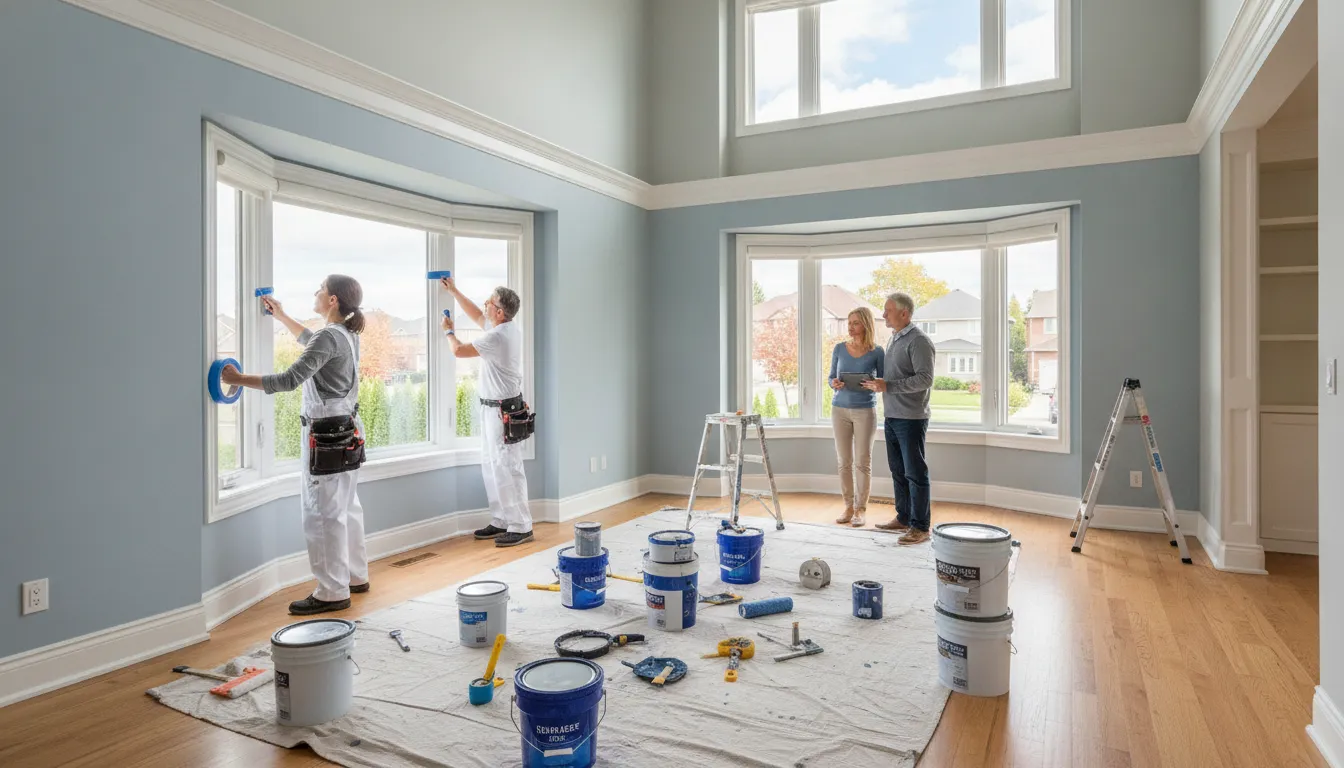
What determines how much a pro painter will charge in the GTA?
Professional painting costs are driven by the scope of work, surface condition and prep needs, materials and finishes, access and logistics, and local labour and permit considerations — together these explain most of the price variation.
Scope and square footage
Estimates start from how much area must be painted. Painters price by the linear foot, square foot, or per-room, and larger continuous areas (open-plan living rooms, exteriors) usually bring better unit pricing than many small rooms because setup and cleanup time spread over more surface.
Surface condition and preparation
Prep is often the costliest part: scraping, sanding, repairing drywall, addressing rot or rust, and priming are billed separately or rolled into the estimate. Poorly maintained surfaces can turn a simple repaint into a drywall, carpentry, or masonry job.
Materials and finish level
Paint quality, sheen (flat, eggshell, satin, semi-gloss), and specialty coatings (stain-blocking primers, mildew-resistant, high-traffic enamel) change cost. Higher-end paints cost more per litre but can cover better and last longer, sometimes lowering life-cycle costs.
Access, protection, and logistics
Work requiring scaffolding, lifts, extensive masking, or working around landscaping and finished floors increases labor and equipment charges. Narrow streets, driveway limitations, and parking rules in Ajax or nearby Whitby and Pickering can add logistical time that shows up on the invoice.
Step-by-Step: What Drives Professional Painting Costs in the GTA
Below are the common steps from initial inquiry to finished job and where cost drivers typically appear during the process.
- 1
Initial contact and scope definition
You describe the rooms or exterior areas and any known issues (peeling, water stains, mould). Clear photos and measurements at this stage reduce guesswork and produce more accurate initial quotes.
- 2
On-site inspection and detailed estimate
A good contractor inspects surfaces, notes hidden repairs, and checks access and protection needs; this is where they determine if scaffolds, lifts, or special primers are required. Estimates should separate material, labor, and prep so you can see what drives cost.
- 3
Material selection and scheduling
Choosing paint brands and finishes affects the materials line; seasonal availability can also matter in Ontario if certain exterior coatings aren’t recommended in cold months. Scheduling affects cost too—short notice or peak-season jobs often command a premium.
- 4
Preparation and repair work
Contractors perform patching, sanding, caulking, and primer application as needed; significant carpentry or masonry repairs are often charged as additional line items. The time spent here is a major portion of labor costs, especially for older Ajax houses with weathering.
- 5
Painting and quality checks
Application technique, number of coats, cutting-in, and use of brushes vs. sprayers determine time and finish quality. Experienced teams that back-roll or back-brush sprayed areas to ensure adhesion may charge more but produce more durable results.
- 6
Cleanup and final inspection
Proper cleanup, disposal of materials, and a walkthrough to address touch-ups conclude the job; some contractors include this in the estimate, others add a final fee for deep cleanup. A signed completion checklist reduces surprise charges later.
Mistakes to Avoid
Avoiding common mistakes saves money and improves the final result. Below are frequent homeowner errors and practical ways to prevent unnecessary cost increases.
Skipping a full inspection before hiring
Accepting a ballpark quote from photos alone can lead to major surprises when a contractor sees hidden rot or multiple layers of old paint. Ask for an on-site, written estimate that itemizes prep work, repairs, and paint allowances before committing.
Choosing purely on lowest price
A low bid can mean corners cut on prep, inferior paint, or fewer coats. Request references, ask about warranties, and compare the materials listed in each bid — sometimes a higher up-front cost avoids a repaint sooner.
Delaying necessary repairs
Putting off rot repair, moisture control, or structural fixes before painting leads to recurring failure and higher long-term expense. For exterior work in Durham Region, confirm repairs and moisture mitigation are done first to prevent wasted paint.
Not verifying insurance and permits
For larger exterior projects requiring scaffolding or access in public right-of-way, you may need a permit or traffic control; contractors should carry liability and WSIB (Workers Safety and Insurance Board) coverage in Ontario. Always verify coverage and whether the contractor will obtain any required permits — local rules vary, so check with your municipality.
What Affects Your Outcome
Key variables that shift price, timeline, and risk.
Deadline and seasonality
Summer and early fall are peak painting seasons in the GTA; tight deadlines or off-season scheduling (cold or wet weather for exteriors) can push up costs or force product substitutions to accommodate conditions.
Quality of documentation and measurements
Accurate room sizes, ceiling heights, and notes about trim and built-ins let contractors give tighter estimates. Poor measurements invite contingency charges later.
Type of property and age
Older Ajax homes often require more prep for lead paint concerns, multiple old coatings, and wood rot—each adds labour and specialty products. Newer builds may need less repair but higher-end finishes if requested.
Insurance claims vs. private projects
If painting is part of an insurance claim for water damage, insurers in Ontario usually require documented pre-loss photos, a professional estimate, and an adjuster’s approval; this process can extend timelines and change the payment flow.
Local permitting and municipal rules
Some exterior work may intersect with municipal bylaws in Durham Region or require approvals for scaffolding or road access. Confirm with your local building department and the contractor who will handle permit interactions.
Contractor experience and crew size
Experienced crews are faster and produce more consistent finishes; larger teams get jobs done sooner but cost more in total labour; think in terms of trade-offs between time, quality, and price.
Frequently Asked Questions
How do painters in Ajax normally price interior work?
Many painters price interior jobs by the room, square foot of wall area, or by a bundled per-room rate that includes taping, cutting in, and two coats. Ask for a line-item estimate that separates prep, prime, paint, and trim work so you can compare apples to apples.
Do I need a permit for exterior painting in the GTA?
Most simple exterior repaint projects don’t require a building permit, but work that involves scaffolding in the public right-of-way, structural repairs, or changes to siding/windows might. Rules vary by municipality — confirm with Ajax or Durham Region building offices before work begins.
What should a written estimate include?
A clear estimate lists the scope (areas to be painted), surface prep tasks, paint brand and colour allowances, number of coats, equipment needs, timeline, warranties, and a payment schedule. If anything is vague, ask for clarification so you’re not surprised by add-ons.
How much does paint quality affect long-term cost?
Higher-quality paints often have better hide and durability, meaning fewer coats and longer intervals between repaints; this can reduce life-cycle cost even if upfront materials cost more. Consider warranty and local conditions — for example, sun and moisture exposure on Ajax exteriors.
Should I be present during the estimate or the job?
Being present for the estimate helps show problem areas and clarifies expectations; you don’t need to be at every stage of the job, but a pre-start walkthrough and a final walkthrough ensure the scope and finish meet your expectations. For insurance-related jobs, document everything for your adjuster.
How do I compare bids fairly?
Compare bids by scope, prep level, paint brand and sheen, number of coats, warranty, and whether labour includes repairs and cleanup. Ask each contractor to explain major differences and get references or recent local examples to validate quality.
Free on-site painting assessment for Ajax homeowners
We’ll inspect surfaces, identify prep needs, and provide a detailed, written estimate — no pressure, no obligation.
Get a Free Quote