
Careful Repaint of a Century Home in East Gwillimbury
Careful exterior repaint of a 100‑year‑old house with heritage details and limited access.
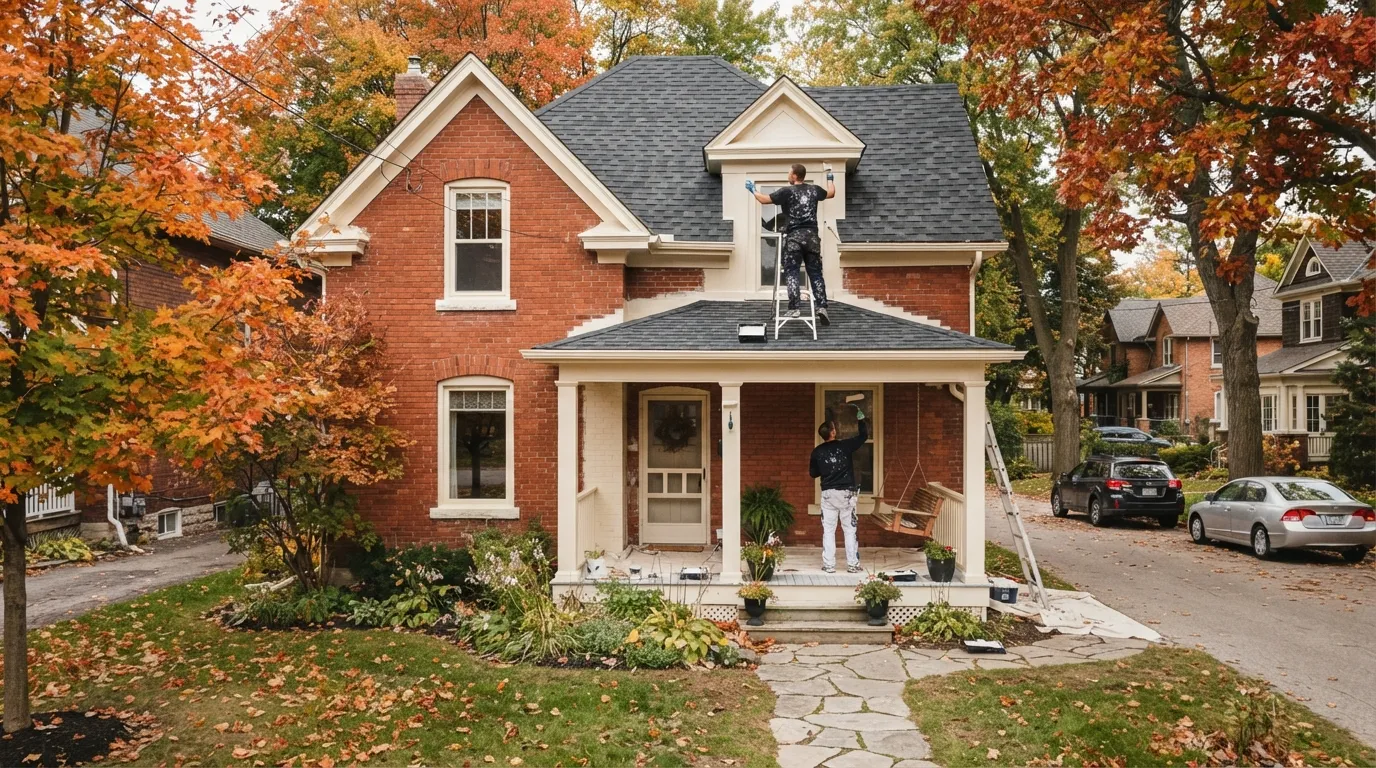
What we walked into
This was a straightforward job on paper: a full exterior repaint of a century home in East Gwillimbury. On closer inspection the house needed careful attention — layered lead‑based paint (suspect), soft old wood trim, and a wraparound porch with turned posts. The homeowner wanted the original look preserved, but with modern durability so the next owner wouldn’t spend years on repairs.
Old paint layers and potential hazards
The clapboard and trim showed multiple paint generations. We treated several areas as suspect for lead and followed containment and testing protocols. That meant HEPA vacuums, regulated waste bags, and using hand‑scraping and heat‑control methods approved for older homes.
Delicate trim and narrow access
The house has narrow eaves, decorative brackets, and a two‑storey bay window that sits close to a neighbour’s fence. Scaffolding had to be compact and stage‑friendly. We avoided aggressive power tools where fine mouldings were involved to prevent damage.
Aiming for heritage look with modern performance
The homeowner wanted the original cream and sage palette retained. They also asked for paints and primers that resist Ontario freeze–thaw cycles, UV and moisture common to York Region. That required balancing breathability and adhesion without changing the profile of the mouldings.
How we tackled it
- 1
Survey, testing and planning
We performed an initial inspection and spot tested for lead with certified test kits, then sampled for lab confirmation where needed. We mapped out containment, scaffold positions (narrow bearer scaffolding), and a paint schedule that avoided rainy stretches in the America/Toronto seasonal window.
- 2
Containment and safe surface prep
Where old layers were suspect we set up full containment with 6‑mil poly and negative‑pressure HEPA filtration. For non‑hazard areas we used hand‑scrapers, 80–120 grit sanding and a 2‑stage pressure wash at low psi to avoid driving water under the siding seams.
- 3
Repair and priming
Rot repair used epoxy consolidant and epoxy fillers on thin wood, with new primed cedar patch pieces where sections were beyond repair. We applied an oil‑based, alkyd‑modified primer to bare wood and epoxy stabilized areas, and a high‑adhesion latex primer on sound painted areas to standardize the substrate.
- 4
Topcoats chosen for climate and breathability
We specified an acrylic latex topcoat with 100% acrylic binders for flexibility in freeze–thaw, plus high UV resistance. On trim and porch floors we used a satin enamel formulated for exterior abrasion. Colours were matched to the original tones using spectrophotometry to keep the heritage look.
- 5
Final detailing and clean up
Fine brushwork on brackets, balusters and window muntins used a trim brush and back‑rolling where needed for even coverage. We removed containment, disposed of regulated waste per York Region rules, and supplied the homeowner with a finish log — products used, batch codes and recoat recommendations.
What came out the other side
The house went from tired and fragile to robust and authentic. We kept the original visual character while upgrading the surfaces for long life in East Gwillimbury’s climate.
Durability and performance
Using an acrylic topcoat over appropriate primers gives flexibility for seasonal movement and strong adhesion against moisture intrusion. The repaired and epoxy‑stabilized trim reduces the likelihood of short‑term rot recurrence.
Heritage look preserved
Colours were matched closely to the original palette. The fine details — brackets, mouldings and spindles — were hand‑finished so the house reads as a restored century home rather than a modern repaint.
Paper trail and peace of mind
We provided a written scope, safe‑work notes for areas treated as lead‑suspect, and a maintenance schedule. The homeowner got product names and recoat timelines so their next steward in East Gwillimbury or nearby Newmarket can plan upkeep.
Questions you’ll ask on a job like this
How long will an exterior repaint on a century home take?
For a detailed job with testing, repairs and weather windows expect several weeks. Prep and repairs take the bulk of the time; paint goes on fast but only when substrate and weather conditions meet our standards.
How disruptive is the work to daily life?
We run a compact crew and stage work to keep noise and disruption minimal. Containment for suspect paint is the loudest part; we keep residents informed and tidy up at the end of each day.
When is it time to repaint an older wood house?
Look for flaking, exposed wood, or areas where moisture has caused soft spots. If paint’s failing in multiple places, that’s a sign to address both finish and underlying repairs to prevent rot and water entry.
Do you follow local rules for hazardous paint?
Yes. For suspect lead layers we follow containment, testing and disposal practices consistent with York Region requirements and general provincial guidance. We document what we did and supply that to the homeowner.